Resources
For When You Need Help NOW
YOUTUBE VIDEOS
Enjoy a wide range of YouTube videos below to find relief fast!
Yoga For
Back Pain
Help! I Just Threw
Out My Back!
Yoga
For Runners
Neck and Back Pain Relief (Part 1)
Why Your Hip Might Be Causing Your Knee/Ankle/Foot Pain
Dr. Hannah’s Top 4 Glute Activation Exercises to Reduce Back Pain
Dr. Hannah’s Top 4
Strength Exercises
for Runners
Dr. Hannah’s Top 4
Miniband Exercises
for Runners
READ OUR BLOG
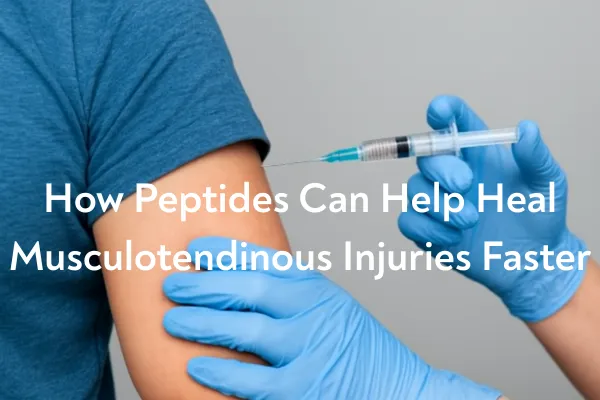
How Peptides Can Help Heal Injuries
How Peptides Can Heal Musculotendinous Injuries
Revive Physiotherapy in Fort Lauderdale serves active adults, encouraging them to recover from injuries, regain their strength, and return to the things they love in life. Whether you are a CrossFit athlete lifting mountains or lifting weights, a runner slogging for long miles, or someone staying physically active as you get older, musculotendinous injuries—or injuries to the muscles and tendons—can be so frustrating and constraining.
A budding new field of sports medicine and rehabilitation offers us some exciting hope: peptide therapy. These tiny but potent molecules can speed up recovery, boost recovery, support body tissues, and increase the body’s natural response to healing when used in conjunction with physiotherapy based on science.
In this article, you’ll learn:
What are peptides, and how are they effective?
Importance of BPC-157 and TB-500 in tendon/muscle repair.
How peptides complement physiotherapy and rehab programs.
Safety and research aspects of peptide therapy and peptide therapy before introducing.
What Are Peptides?
Peptides, or short chains of amino acids, the very building blocks that form proteins. Unlike larger proteins with very long chains, peptides are small enough to bind directly to cell receptors, thereby signaling the body to initiate particular physiological actions.
Think of them as messenger molecules: they can induce tissue repair, suppress inflammation or promote growth. This precision is why they're being studied in wound healing, inflammation control, and, in addition, connective tissue repair.
Among the peptides that are being studied in musculoskeletal rehabilitation are:
BPC-157 (Body Protection Compound-157).
TB-500 (Thymosin Beta-4 fragment).
How Musculotendinous Traumas Occur?
Muscles and tendons contain the ability to bear such heavy loads, absorb energy and transfer force. But they also are susceptible to strains, tears and chronic overuse injuries.
The challenge:
Tendons heal slowly because of poor blood supply.
Many injuries of the tendons become chronic due to inadequate tissue regeneration, even with proper rehab.
This is where peptide therapy might provide an advantage — by triggering biological processes that stimulate and accelerate healing.
BPC-157, The "Body Protection Compound"
BPC-157 is derived from a protein found in the stomach that has been extensively studied for its regenerative properties.
How BPC-157 Works:
It promotes angiogenesis (the formation of new blood vessels), so there's better blood flow to the tendon.
Stimulates synthesis of collagen, strengthening tendons and ligaments.
It also causes anti-inflammatory effects in the body so they do not go into pain and swelling relief.
Supports neuroprotection and healing of nerves.
Athlete Benefits:
A faster recovery of the tendon muscle and tissue.
Increased recovery from injuries, and less time lost to injury.
Tissue integrity and structural stability is strengthened with the aid of this treatment.
TB-500: The Thymosin Beta-4 Fragment
This synthetic version of a natural peptide is important for healing and tissue regeneration.
How TB-500 Works:
Regulates actin, a protein crucial for migration and repair of cells.
Reduces inflammation which may hinder recovery time.
Increases the flexibility and elasticity of the healing tissue.
How Musculotendinous Injuries Benefit:
Speeds up tissue repair.
Enhances tendon remodeling.
Increases mobility and decreases stiffness.
Why Peptides Are Most Effective Together with Physiotherapy
Peptides shouldn't replace rehabilitation. Real recovery involves changes in movement patterns, strength deficits and tissue load tolerance.
At Revive Physiotherapy we are applying evidence-based rehab with alternative treatments such as peptide therapy. Our treatments include:
Strength training and movement correction – to deal with the source of pain
Progressive loading – strengthening in healing tissue.
Manual therapy – blood flow and mobility improved.
Dry needling – stimulating the localized healing response.
Patient education – facilitating long-term recovery strategies.
Peptides, when used with appropriate rehab, can accelerate the body’s natural healing response and facilitate ongoing healing and result.
The Research on Peptide Therapy
The early research seems promising, but it’s vital to note:
The majority of research on BPC-157 and TB-500 is in animal models.
Clinical trials in humans are also scarce.
Neither peptide has had FDA approval for use as a treatment for muscle or tendon injuries.
Nonetheless, many clinicians and patients report anecdotal success — a quicker recovery, stronger tissue, and greater function on returning to a previous state after injury.
Safety Considerations
When you consider peptide therapy, remember:
So, it’s a matter of quality – you focus only on pharmaceutical-grade, lab-tested peptides.
The results vary from patient to patient- not all patients respond the same.
Regulatory status – peptide therapy is still investigational in the U.S.
Peptide therapy must always be treated on a monitored basis by an expert medical personnel for safety and to benefit patients by the end result.
The Big Picture: Building Tendon and Muscle Endurance
The main aim of peptide therapy isn’t simply faster recovery; it’s sustainable tissue repair. Together with strength training, proper load management and physiotherapy, peptides might help with:
Decrease risk of chronic tendon injuries.
Improve training tolerance.
Extend athletic careers and active lifestyles.
This is consistent with our mission as Revive Physiotherapy: we want you to move great, recover as fully as possible and lead the life of your dreams!
Final Thoughts
Peptide therapy has become a new tool in sports medicine and rehabilitation. To be sure more research is needed before it is common practice, BPC-157 and TB-500 hold some fascinating potential for such healing of muscles and tendons.
At Revive Physiotherapy we are committed to these continuing efforts:
Listening to our patients.
Creating patient rehab services tailored to patient needs.
Applying emerging technology like peptides with responsibility.
Ready to Cure Your Injury Quicker?
If you’re contending with a stubborn muscle or tendon injury, don’t wait until it becomes chronic. The sooner you begin to start the right recovery plan, the quicker the better.
👉 Book your consultation with Revive Physiotherapy now and let’s get together so we can formulate a personalized plan that brings you back to the active life you love.
📍 Located in Fort Lauderdale, FL, we proudly serve athletes, active adults, and anyone committed to moving better and living pain-free.

Our one-on-one treatment sessions ensure that you fully understand your body and take ownership of your health so that you can have control over doing the things you love!
Send us a Message
Let's Have a Chat
954 - 519 - 4185
Find us at
2852 E Oakland Park Blvd
Fort Lauderdale, FL 33306


2024 REVIVE PHYSIOTHERAPY | ALL RIGHTS RESERVED