Resources
For When You Need Help NOW
YOUTUBE VIDEOS
Enjoy a wide range of YouTube videos below to find relief fast!
Yoga For
Back Pain
Help! I Just Threw
Out My Back!
Yoga
For Runners
Neck and Back Pain Relief (Part 1)
Why Your Hip Might Be Causing Your Knee/Ankle/Foot Pain
Dr. Hannah’s Top 4 Glute Activation Exercises to Reduce Back Pain
Dr. Hannah’s Top 4
Strength Exercises
for Runners
Dr. Hannah’s Top 4
Miniband Exercises
for Runners
READ OUR BLOG
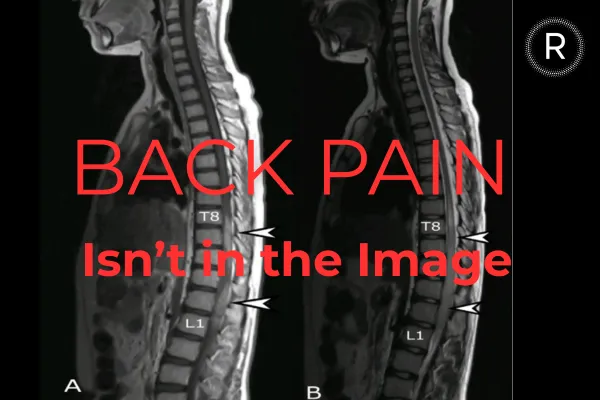
Back Pain and Imaging: Why Pictures Don’t Always Tell the Story
Back Pain and Imaging: Why Pictures Don’t Always Tell the Story
Introduction
Back pain is one of the most common reasons people seek medical care. It is estimated that up to 80% of adults will experience low back pain at some point in their lives. When it happens, the first instinct for many people is to ask for an X-ray or MRI. The logic seems simple: “If my back hurts, let’s take a picture to see what’s wrong.”
But here’s the truth: imaging often shows “abnormalities” that are completely normal for age and frequently not the cause of pain. At the same time, many people with severe back pain have normal-looking imaging.
This disconnect leaves patients confused and sometimes fearful. Even worse, unnecessary imaging can lead to unhelpful treatments or surgeries. That’s why, for most cases of back pain, physical therapy should be your first stop, NOT the X-ray machine.
The Problem with Imaging: Abnormalities Are Common in People Without Pain
Research has repeatedly shown that MRI and X-ray findings do not always correlate with symptoms.
A landmark review in The New England Journal of Medicine reported that over 50% of adults without back pain had bulging or degenerated discs on MRI.
A 2015 systematic review of imaging in Asymptomatic adults found:
30% of people in their 20s already showed disc degeneration on MRI.
By age 50, 80% had disc degeneration and 60% had bulging discs—yet many reported no pain at all.
By age 70, more than 90% had disc changes on imaging, regardless of symptoms.
Arthritis, disc height loss, spondylosis, and even small herniations are normal parts of aging and not always painful. Just because your MRI shows degeneration or a bulging disc, does not mean that’s why your back hurts. These changes are like wrinkles on the inside, they come with age and don’t necessarily cause problems.
Why Back Pain Isn’t Always About Bones or Discs
If imaging doesn’t always explain back pain, what does? Pain is multi-factorial, and several contributors exist outside of arthritis, bones, or discs.
1. Muscular Causes
Muscle strains or spasms are among the most common causes of acute back pain.
Imbalances between core, hip, and spinal muscles can overload certain areas, creating pain that isn’t visible on imaging.
2. Joint and Soft Tissue Contributions
Irritation of facet joints or ligaments may cause localized pain or stiffness.
These tissues don’t always show up clearly on MRI.
3. Movement Dysfunction
Poor posture, limited hip mobility, or weak glutes can change spinal mechanics.
Repeated faulty movement patterns (like bending, twisting, or lifting) can cause pain without any structural “damage.”
4. Nervous System Sensitization
The nervous system can amplify pain signals, creating discomfort even in the absence of structural injury.
This explains why imaging might look “normal,” yet pain is severe.
5. Lifestyle and Systemic Factors
Stress, lack of sleep, and low activity levels all heighten pain sensitivity.
Sedentary lifestyles weaken spinal support muscles, leaving the back more vulnerable.
Back pain usually is not a “hardware” problem. It’s often a “software” issue involving muscles, movement, and the nervous system.
The Risks of Imaging First
Going straight to an orthopedic doctor and requesting an MRI or X-ray may feel proactive, but it often leads to unintended consequences.
1. Incidental Findings = Fear
When imaging reveals age-related “abnormalities,” patients believe their back is “damaged” or “broken,” even when those findings are not the cause of pain. This fear often leads to reduced activity, which actually makes back pain worse.
2. Overmedicalization
Unnecessary imaging often leads to unnecessary procedures like injections, medications, or even surgery. None of which actually address the true cause of pain.
3. Delayed Recovery
Time spent waiting for imaging, follow-up appointments, and specialist visits delays the start of active recovery. Early movement and rehab are key to faster outcomes.
Why Physical Therapy First
Instead of starting with imaging, beginning with physical therapy puts patients on the best path toward relief and recovery.
1. PT Focuses on Function, Not Just Pictures
Physical therapists evaluate how your body moves, how strong your muscles are, and how your body functions in daily life. This gives far more useful information than an image alone.
2. PT Addresses Root Causes
Whether it’s weak glutes, stiff hips, or poor lifting mechanics, Physical Therapy identifies and corrects the root issues driving pain.
3. Active Treatment > Passive Waiting
While imaging is passive (you wait for results), PT is active: You start moving, strengthening, and retraining the nervous system right away.
4. Evidence Favors PT for Back Pain
International guidelines recommend exercise and education as first-line treatment for back pain.
Most cases of nonspecific back pain improve with PT without the need for imaging or surgery.
Research shows exercise-based therapy can be as effective as surgical interventions for many spinal conditions.
5. PT Builds Confidence and Independence
Physical therapy equips patients with tools to self-manage, reducing fear of movement and empowering them to return to activity safely.
When Imaging Is Appropriate
Imaging still has an important role, but usually only when “red flags” are present, such as:
Severe trauma (fall, accident)
Suspected fracture, infection, or cancer
Progressive neurological symptoms (weakness, numbness, bowel/bladder dysfunction)
Lack of improvement after months of high-quality conservative care
For the vast majority of people with back pain, these red flags aren’t present meaning PT first is the better choice.
The Bigger Picture: Back Pain Is Treatable
One of the most important messages we share at Revive Physiotherapy is this: back pain does not mean you have a "bad back." Image findings like bulging discs, arthritis, or “degeneration” are normal as we age. Pain is often related to how the body moves, not just what it looks like on a scan.
Physical therapy offers a safe, effective, and empowering path forward. By focusing on movement, strength, and education, PT helps patients resolve pain, prevent recurrence, and regain confidence, without unnecessary imaging or invasive procedures.
Takeaway
Imaging often shows “abnormalities” in the spine, even in people without pain.
Back pain is multi-factorial and not always related to arthritis, discs, or bones.
Reliance on imaging can delay recovery, create fear, and lead to unnecessary and harmful treatment.
Physical therapy is the evidence-based, first-line treatment for most cases of back pain.
If you’re dealing with back pain, your first step shouldn’t be an X-ray. It should be a conversation with an orthopedic physical therapist.
At Revive Physiotherapy, we help people recover from back pain without unnecessary imaging, medications, or surgeries. Our therapists assess how your body moves, identify the root cause, and create a personalized plan to get you moving confidently again.
📞 Call 954-519-4185 today to schedule your back pain assessment
💻 Book online now to take the first step toward long-lasting relief
Because the answer to back pain isn’t in the pictures, it’s in how you move.

Our one-on-one treatment sessions ensure that you fully understand your body and take ownership of your health so that you can have control over doing the things you love!
Send us a Message
Let's Have a Chat
954 - 519 - 4185
Find us at
2852 E Oakland Park Blvd
Fort Lauderdale, FL 33306


2024 REVIVE PHYSIOTHERAPY | ALL RIGHTS RESERVED